Most people think of manga as books. The volumes on the shelf, the collected editions, the omnibuses. What gets lost in that framing is that most major series were not written that way. They were written a chapter at a time, for a weekly anthology magazine, with editors reading over the author shoulder and reader feedback surveys shaping what stayed in and what got cut.
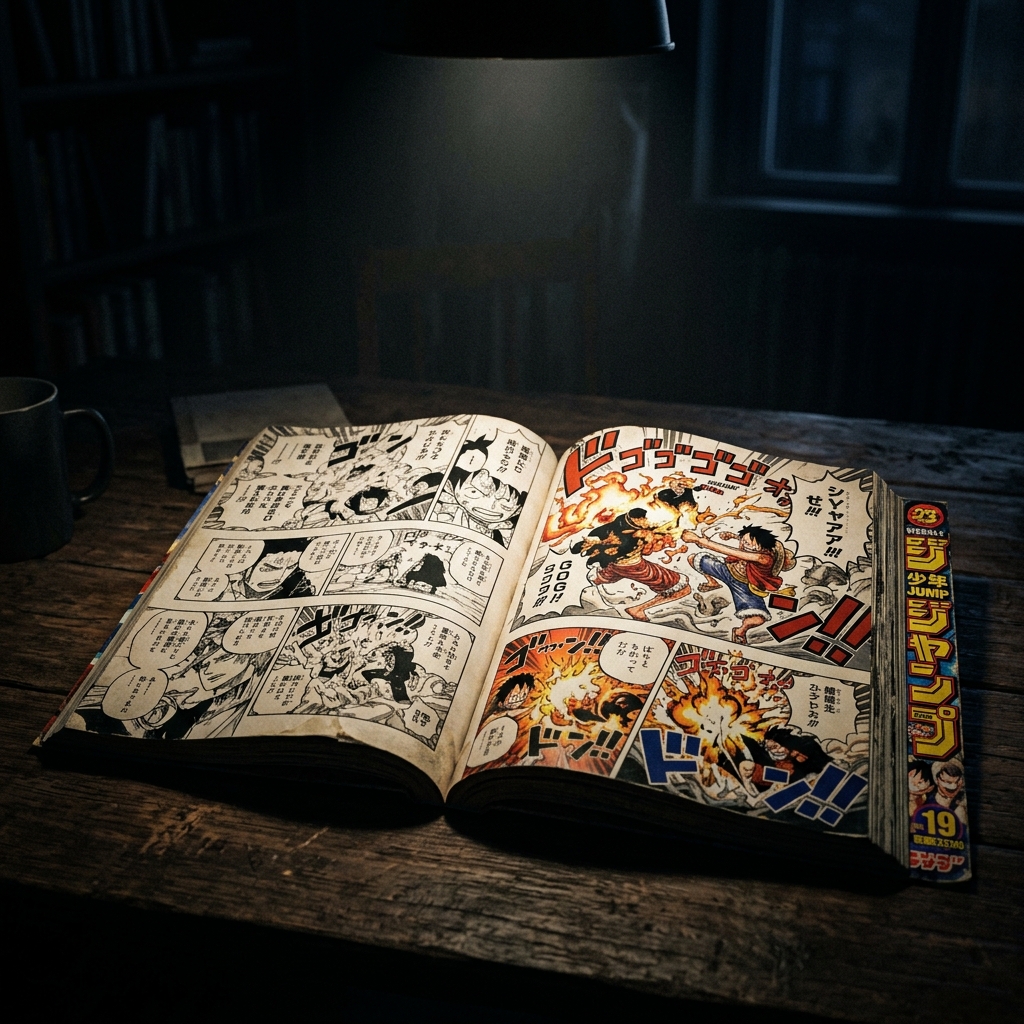
Weekly Shonen Jump, the anthology where One Piece, Naruto, Dragon Ball, and dozens of other major series have run, publishes new chapters every Monday in Japan. Mangaka drawing for Jump are producing roughly 18 to 20 pages per week, which adds up to something like a thousand pages a year if they miss no weeks. Very few miss no weeks.
The pace does things to the storytelling that are specific to the format. Cliffhangers are structural requirements, not stylistic choices. Each chapter needs to end in a place that makes someone want to come back next Monday. Over a long series, that rhythm becomes the heartbeat of the whole thing. When you read it collected, those beats are still there, but they hit differently. Some chapters that feel like natural stopping points in a volume are actually cliffhangers from the original publication that were resolved the following week.
Reader feedback is the part that surprises people. Jump runs surveys with its physical magazine. Readers rank which series they liked that week, and those rankings influence which series get prominent placement, which get expanded and which get cancelled. A series with consistently low survey results gets warned, then gets a final arc, then ends. This is not speculation. It is documented. Plenty of series have mentioned in author notes that the survey rankings shaped what they did.
That means some of what readers respond to as authentic creative choices were actually survival strategies. A popular side character gets more screen time because readers liked them in the survey. An arc wraps up faster than planned because the numbers dropped. The author is making artistic decisions inside a commercial machine that has real teeth.
Understanding this does not make the manga worse. It actually makes certain things more interesting. The fact that One Piece has survived over 25 years of weekly publication, maintained consistent rankings, and kept a coherent long-term story across that entire run is genuinely remarkable. It is the kind of thing that looks easy until you try to figure out how anyone does it.
Monthly magazines like the one that runs Berserk operate differently. More pages per chapter, more time per chapter, less reader survey pressure, slower overall pace. The difference in tone between a Jump series and a monthly seinen series is not just genre. It is the publication format expressing itself through the work.
When you read a completed manga in collected volumes, you are reading something that was built under constraints you cannot see. That is not a complaint. Architecture is built under constraints too. The constraints are part of what shaped the thing into what it is.