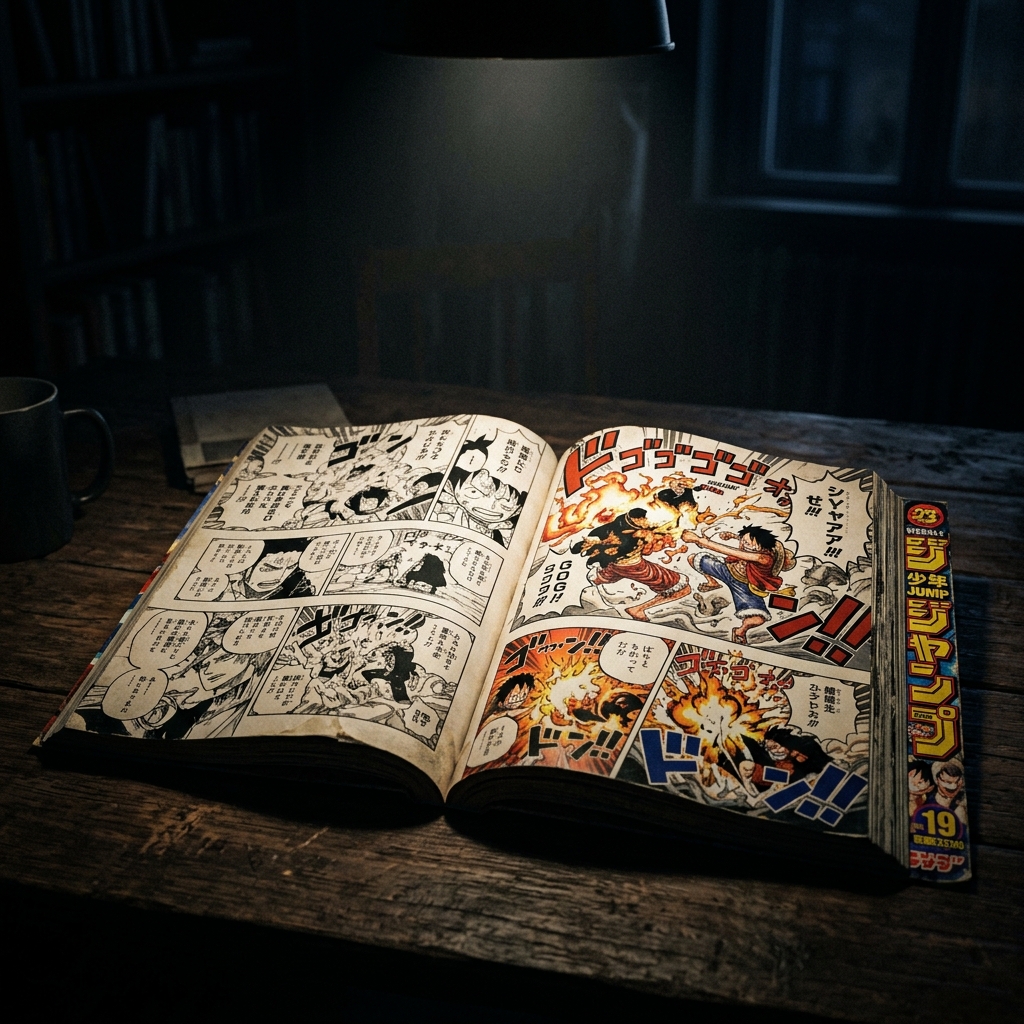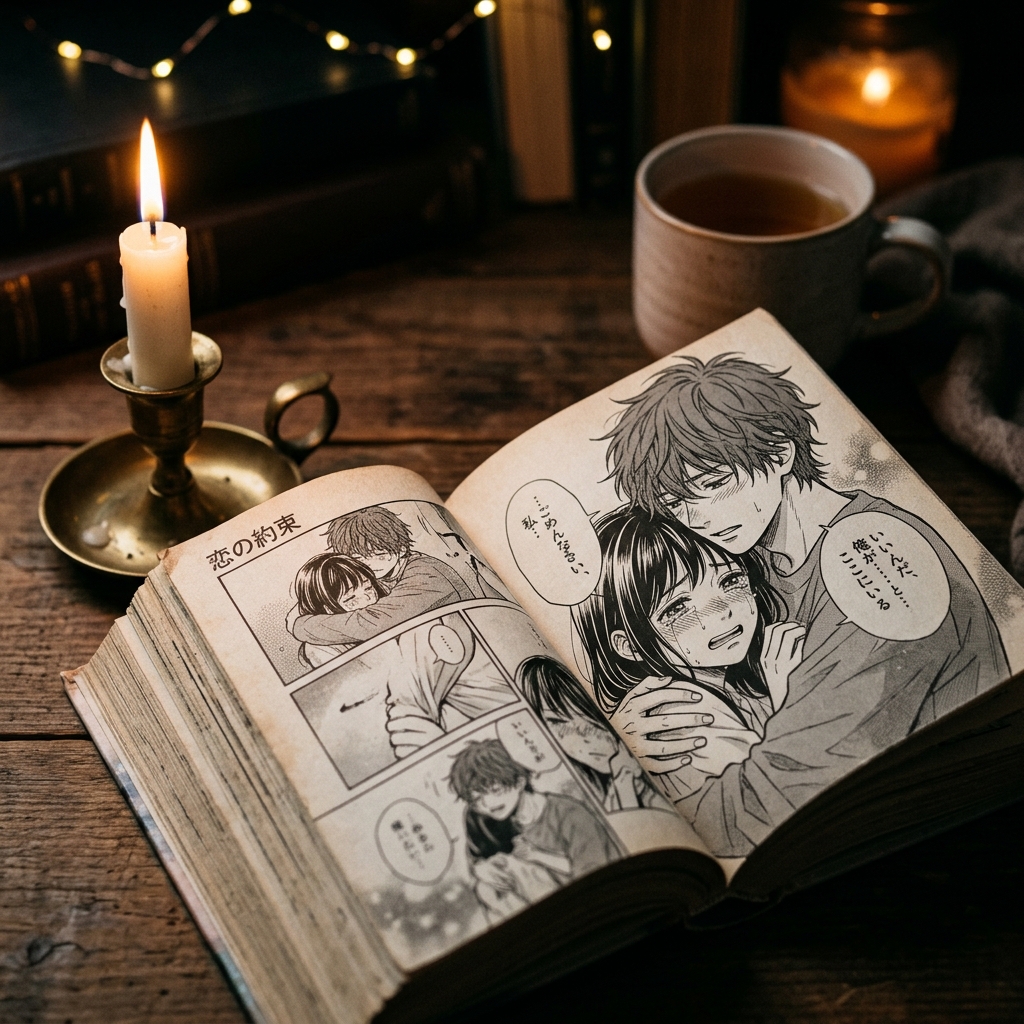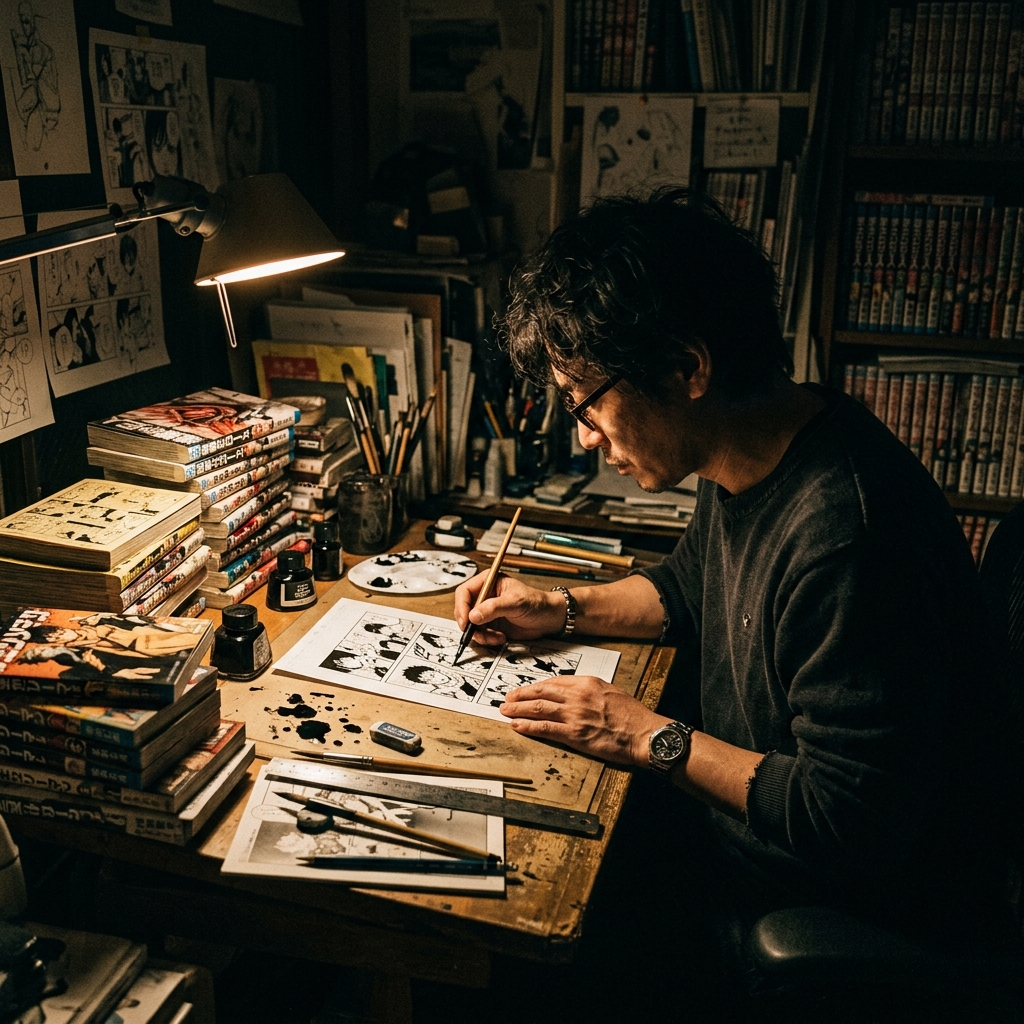
I read my first manga at eleven. Dragon Ball, borrowed from a classmate, read in secret at lunch because I thought it would embarrass me if anyone saw. I read my most recent one last week. Between those two points there are about twenty-five years, an embarrassing amount of money spent on volumes, and a period in my mid-twenties where I decided I had grown out of the medium and then quietly reversed that decision without telling anyone.
The mid-twenties detour is the part I keep thinking about. I had convinced myself that what I was reading was for teenagers and that continuing past a certain age required justification I did not have. That is a specific kind of nonsense, and I know that now, but it took longer to get there than it should have.
What brought me back was Vagabond. Someone left a copy of volume one at a housewarming party, I picked it up because it was near the food, and I read it on the train home. Vagabond is Takehiko Inoue fictionalized account of the swordsman Miyamoto Musashi, drawn with a brush technique that looks closer to classical painting than anything I had associated with comics. It is slow. Nothing about it is designed to get you to the next chapter quickly. It is interested in what violence costs the person doing it, and it takes time asking that question.
I was thirty-one. I bought the next nine volumes the following weekend. Not all twelve, because the bookstore did not have all twelve. I went back for the rest on Tuesday.
What I notice now, reading in my thirties rather than my teens, is that I am less interested in the outcome of fights and more interested in why characters make the decisions that lead to them. When I was a kid and read Dragon Ball, I was following the plot. The fights were the point. Now when I reread sections of it, I find myself paying attention to the adults around Goku, the ones with actual histories who make choices you can trace back to something real. Piccolo. Vegeta. The way both of them change in ways that are not announced but just gradually become true over hundreds of chapters.
I do not think manga is better read as an adult. I think you read different things in it at different ages, and both versions of the reading are real. The twelve-year-old version of me got something from Dragon Ball that the adult version cannot retrieve. The adult version finds things the twelve-year-old would have skipped. Neither is the correct reading.
The embarrassment question is worth addressing, because I suspect it is what keeps some adults from coming back. There is a social cost to being visibly interested in manga and anime past a certain age, depending on where you live and who you spend time with. That cost is smaller than it used to be, partly because the cultural presence of the medium has grown enough that it requires less explanation, and partly because I got older and started caring less about the explanation either way.
I still have the copy of Vagabond from that party. I have read it four times. It is the only volume I own that I did not pay for, which probably means something, though I am not sure what.